It’s finally August, which means your first tuition bill of the year is somewhere on the horizon, along with rent, a damage deposit, textbooks, and whatever it costs to move your life into a new place. The good news is that student aid applications for the fall are open right now, and the single most useful thing you can do this month is also one of the quickest: apply.
Not in late August, not during frosh week, but now. It’s because government processing can take so long, and the difference between applying today and applying at move-in is the difference between money that arrives for September’s bills and money that arrives after them.
There’s a second reason to care, and it’s the part most students don’t know about: the “student loan” application is also the grant application. Grants are money you never pay back, and they’re assessed from the same form. Students who skip the application because “I don’t want debt” are turning down free money without realizing it.
The loan application is also the grant application, and the grant part is money you never pay back.
How student aid actually works
One application covers both governments. You apply through your province, and that single application covers federal money and provincial money together, with grant eligibility assessed on the same form.
Grants and loans are not the same thing. A grant is money the government gives you for school that you don’t have to repay. A loan is money you borrow and repay after you leave school. Both can come out of the same application, and the assessment decides how much of each you’re offered. We wrote a full explainer on the difference in our guide to Canada Student Grants vs. Loans if you want the deeper version.
Who runs it depends on where you live. In Alberta, it’s Alberta Student Aid. In Ontario, it’s OSAP, and our how OSAP works guide covers that system end to end. One real exception to know: Quebec, the Northwest Territories, and Nunavut run their own student aid programs, so Canada Student Grants and Loans aren’t available there. If that’s you, apply through your own program, and the apply-early logic in this issue still applies.
The federal loan is the cheapest borrowing you will ever be offered. Interest on Canada Student Loans was eliminated for good as of April 1, 2023, and federal loans come with a 6-month non-repayment period after you leave school. Translation: the federal portion never charges you interest no matter where you applied, and nobody asks for a payment until half a year after you’re done. The provincial portion of your funding follows your own province’s rules. AB: Alberta’s provincial loan has an interest-free grace period of 12 months, and then interest runs at the prime rate. Prime, for people who speak human: the baseline rate lenders work from. ON: the provincial side of OSAP has its own rules, and our how OSAP works guide walks through them. If you’re graduating and repayment is the part on your mind, Issue 12 walks the whole student-to-working-adult transition. And back in April, Issue 9 put “check your student loans” on the pre-summer checklist; this is the sequel where you act on it.
The free money part
Here’s the number that should get you to the application: the Canada Student Grant for Full-Time Students is worth up to $4,200 per year, or up to $525 for each month of study, through the 2026–27 school year. That’s not a loan, not a rebate, not a tax credit you claim next spring. It’s money for school you never pay back.
And you don’t apply for it directly. You’re considered for grants when you apply for student aid through your province, with no separate grant application. Which is the whole trap: the form is called a “loan application,” so students who don’t want debt never open it, and the grant money attached to it goes unclaimed. Same energy as Issue 14, where the money existed but only paid out if you went and got it. Eligible isn’t the same as paid.
Two honest caveats before you treat grants as a sure thing:
- Grants can convert to loans if you bail early. ON: grants convert to a loan if you withdraw or drop below the minimum course load in the first 30 days and don’t return to full-time studies within 5 months, or if a reassessment changes your eligibility. AB: withdrawing within 30 calendar days of the start of your study period makes grant money an overpayment, and balances over $250 convert to a loan. In plain terms: free money assumes you actually do the semester.
- The grant amount depends on your situation. The “up to” in “up to $4,200” is doing real work. The assessment looks at your circumstances, so your number is your number.
One more thing, because “I don’t want debt” deserves a real answer instead of a workaround: you can take the grant without taking the full loan. ON: you can decline the loan portion after you’re approved and keep the grant. AB: you can request a lesser amount than the maximum right on the application. Applying doesn’t obligate you to borrow a dollar more than you want.
The timeline: count back from your tuition due date
The reason we keep saying “apply now” is arithmetic. Your first tuition payment lands in early fall, and the government needs weeks to process your application before any money moves. Count backwards and August is not early. August is on time, barely.
Here’s what the two provinces tell you themselves:
| Alberta Student Aid (AB) | OSAP (ON) | |
|---|---|---|
| 2026–27 application | Open now; programs starting on or after Aug 1, 2026 use it | Full-time application open now |
| Their timing advice | Apply at least 60 days before classes start | Apply no later than 60 days before the end of your study period, with supporting documents in 40 days before the end |
| Processing time | Most applications within 30 days; manual reviews up to 45 days; peak volumes can run past 45 | About 4 to 6 weeks after your application and documents are in |
| Account setup catch | Verified Alberta.ca Account; verification can take up to 10 business days if your activation code comes by mail | The 4-to-6-week clock starts only once your application and documents are in |
A worked example, illustration only, your dates will vary: say your first tuition payment is due the first week of September. AB: apply this week and most applications clear within 30 days, landing your assessment right around the due date, but a manual review at up to 45 days, or peak-season volume beyond that, pushes you into late September, and Alberta Student Aid’s own advice is at least 60 days of lead time before classes start. ON: the 4 to 6 week clock only starts once your application and documents are in, so an application submitted this week with a straggler document in September is an October assessment. The official OSAP deadline is about the end of your study period, not the start, so nothing forces you to apply before classes, but tuition doesn’t wait for the deadline. In both provinces the answer to “when should I apply” is the same: today, with everything attached.
ON: one more planning detail: OSAP money arrives in two installments, one at the start of your study period and one midway through. Budget for the fall knowing the second half shows up later; Issue 4 covers how to build a budget around exactly this kind of lumpy income.
How to apply, step by step
Step 1: Set up your account today
This is the step with the hidden lag, and each province’s lag looks different. AB: you need a Verified Alberta.ca Account, and verification can take up to 10 business days when the activation code comes by mail, which means the account alone can eat two weeks before you’ve answered a single question. ON: you register for an OSAP account through the online portal, and your lag hides one step later: the 4-to-6-week processing clock doesn’t start until your application and your supporting documents are all in, so today’s job is the account plus rounding up your documents. Either way, start the account today even if you fill out the application on the weekend.
Step 2: Fill out the application
One application, both governments, grants and loans assessed together. Have your basics ready: your school and program, your income information, and your banking details. Full-time, for student aid purposes, means taking at least 60% of a full course load, or 40% if you have a permanent or persistent disability. And remember from the free money section: AB lets you request less than the maximum loan on the form itself, and ON lets you decline the loan portion after approval and keep the grant, so wanting a smaller loan is not a reason to skip applying in either province.
Step 3: Sign your MSFAA
The MSFAA is the Master Student Financial Assistance Agreement, the legal contract behind your funding. For people who speak human: it’s the one-time paperwork that lets the money move. You sign it once and it covers your present and future loans; you only re-sign after a 2-year break from school or if you move provinces. If you signed one last year, this step is done and you skip ahead.
Step 4: Your school confirms your enrolment
Before any money is released, your school confirms you’re enrolled in the program you applied for. Most of the time there’s nothing for you to do here, but it’s the reason funds don’t move the moment you’re approved. The money waits on your school, not just on you.
Step 5: The money arrives
Funding is deposited once everything above is complete. ON: it comes in the two installments we covered in the timeline section, so plan the fall budget with both dates in mind.
If aid isn’t enough, or you don’t qualify
Student aid is the foundation, not the whole building. Two more floors:
Scholarships and bursaries. A scholarship is merit-based and a bursary is need-based; in plain terms, scholarships are about what you’ve done, bursaries are about how much money you have, and neither is repaid. The hard part was never qualifying for them, it’s finding them, and that’s a job you can hand off: the hi finance app notifies you about scholarships and bursaries you qualify for.
A student line of credit, as a backstop. If government aid doesn’t cover your costs, or you don’t qualify, a bank’s student line of credit can fill the gap. It’s borrowed money that charges interest like any bank product, so it belongs behind grants and government loans in your order of operations, not in front of them. Our student line of credit vs. student loan guide breaks down when it makes sense, and Issue 4 covers why structured borrowing beats putting school on a credit card.
Common questions
Do I have to take the loan to get the grant? You have real control here. ON: decline the loan after approval and keep the grant. AB: request a lesser loan amount than the maximum on the application. What you can’t do is get the grant without applying at all.
What if I’m studying part-time? Part-time for student aid means 20 to 59% of a full course load, and there’s a separate part-time stream. The figures in this issue are for full-time students, but the apply-through-your-province logic is the same.
I’m in Quebec, the Northwest Territories, or Nunavut. Does any of this apply to me? Those three run their own student aid programs, and Canada Student Grants and Loans aren’t available there. Apply through your own program, and apply early for the same reasons.
Do grants ever have to be paid back? If you finish your semester, no. If you withdraw early, they can convert to loans: ON converts grants if you withdraw or drop below the minimum course load in the first 30 days and don’t return full-time within 5 months, or on reassessment; AB treats grant money as an overpayment if you withdraw within 30 calendar days of the study period starting, and balances over $250 become a loan.
When does repayment actually start? Federal loans have a 6-month non-repayment period after you leave school, and the federal portion charges no interest at all. Provincial portions follow their own rules; AB: the provincial loan gives you 12 interest-free months, then interest at the prime rate. Issue 12 covers the whole repayment transition for grads.
The easier way: apply with hi finance
Count what you just read: one application but two governments, an account setup with its own lag, an agreement to sign, weeks of processing, and a school confirmation before a single dollar moves. For money this cheap it’s worth every step, but that doesn’t mean you have to grind through it alone.
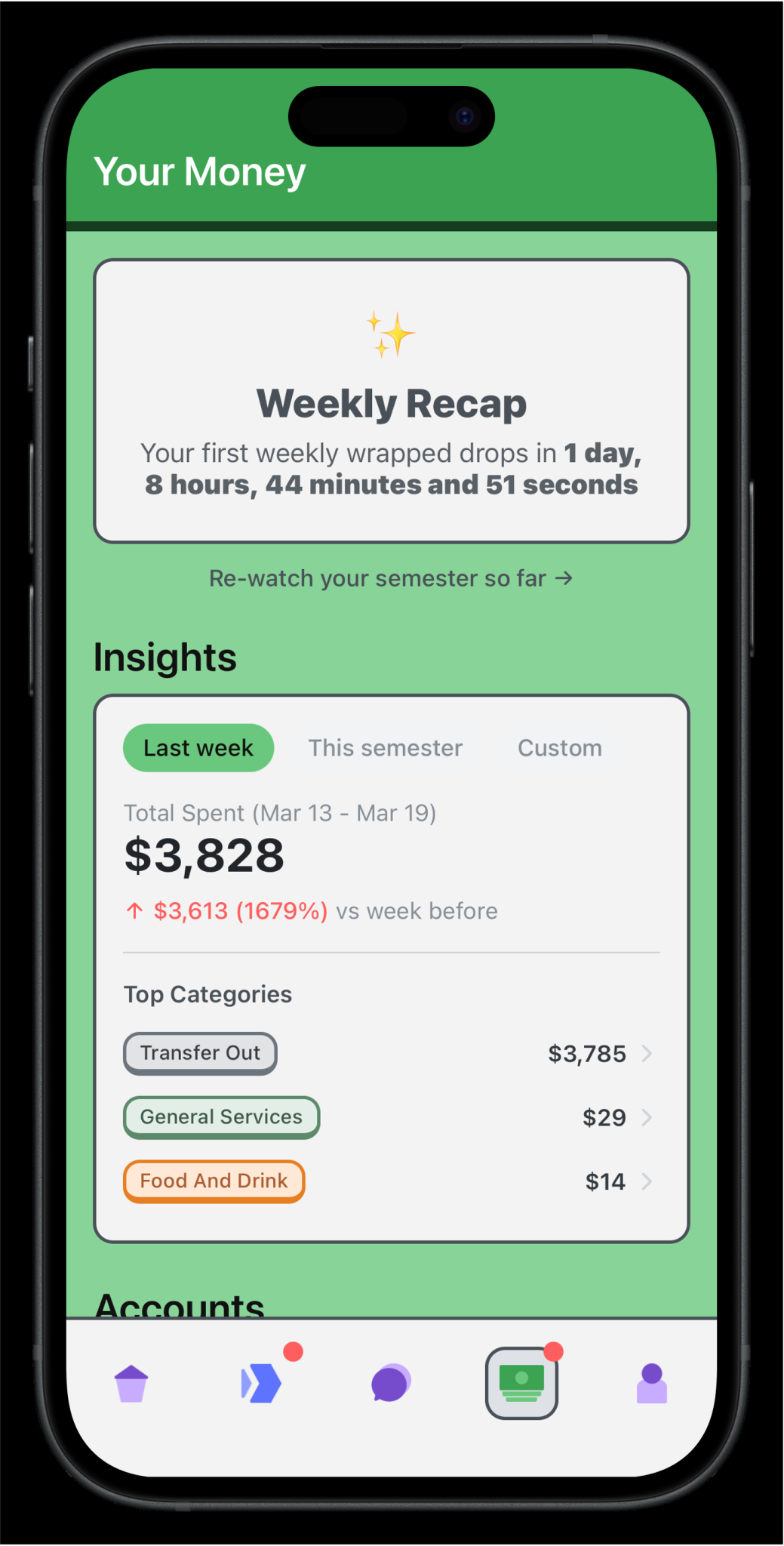
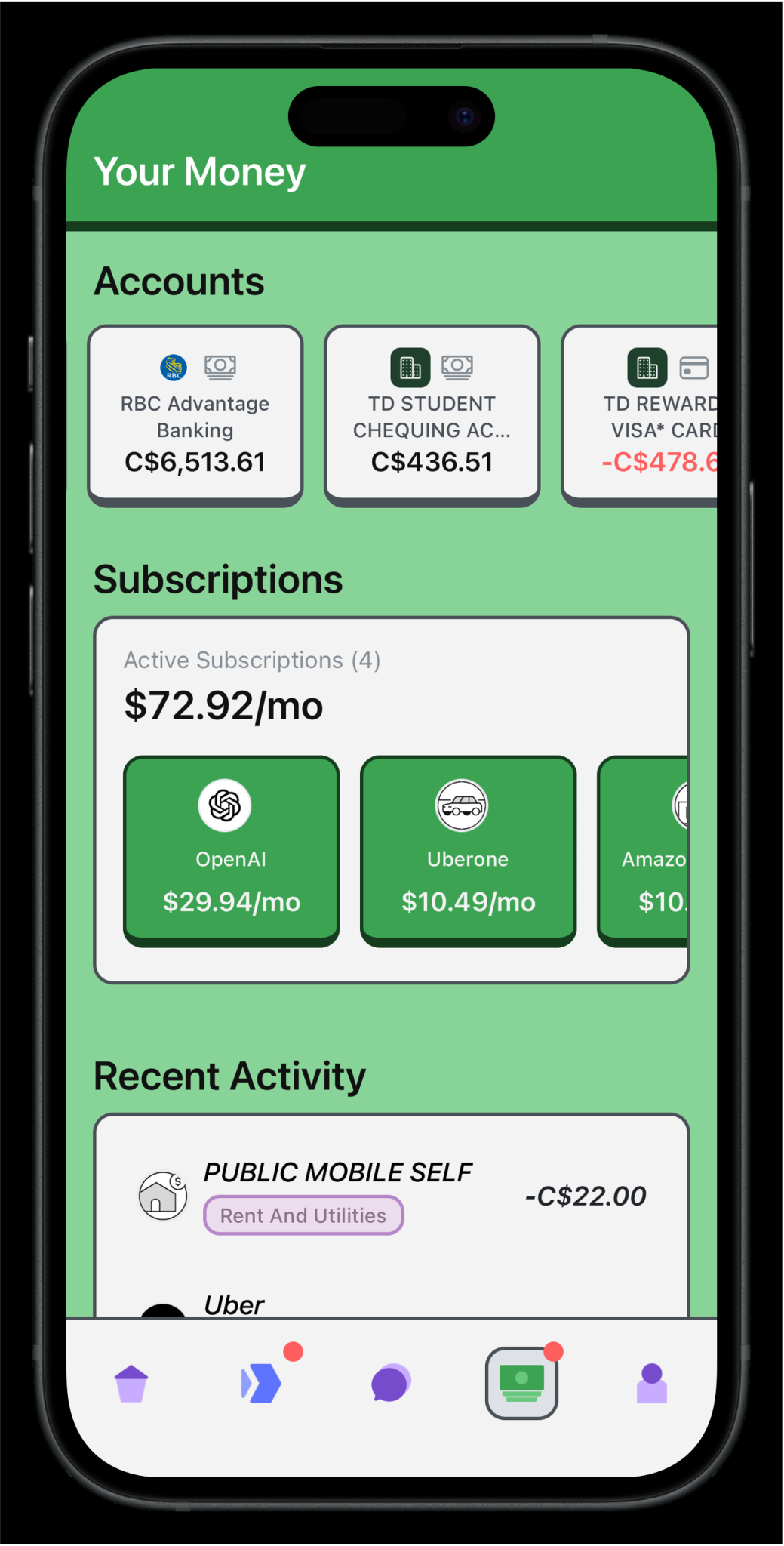
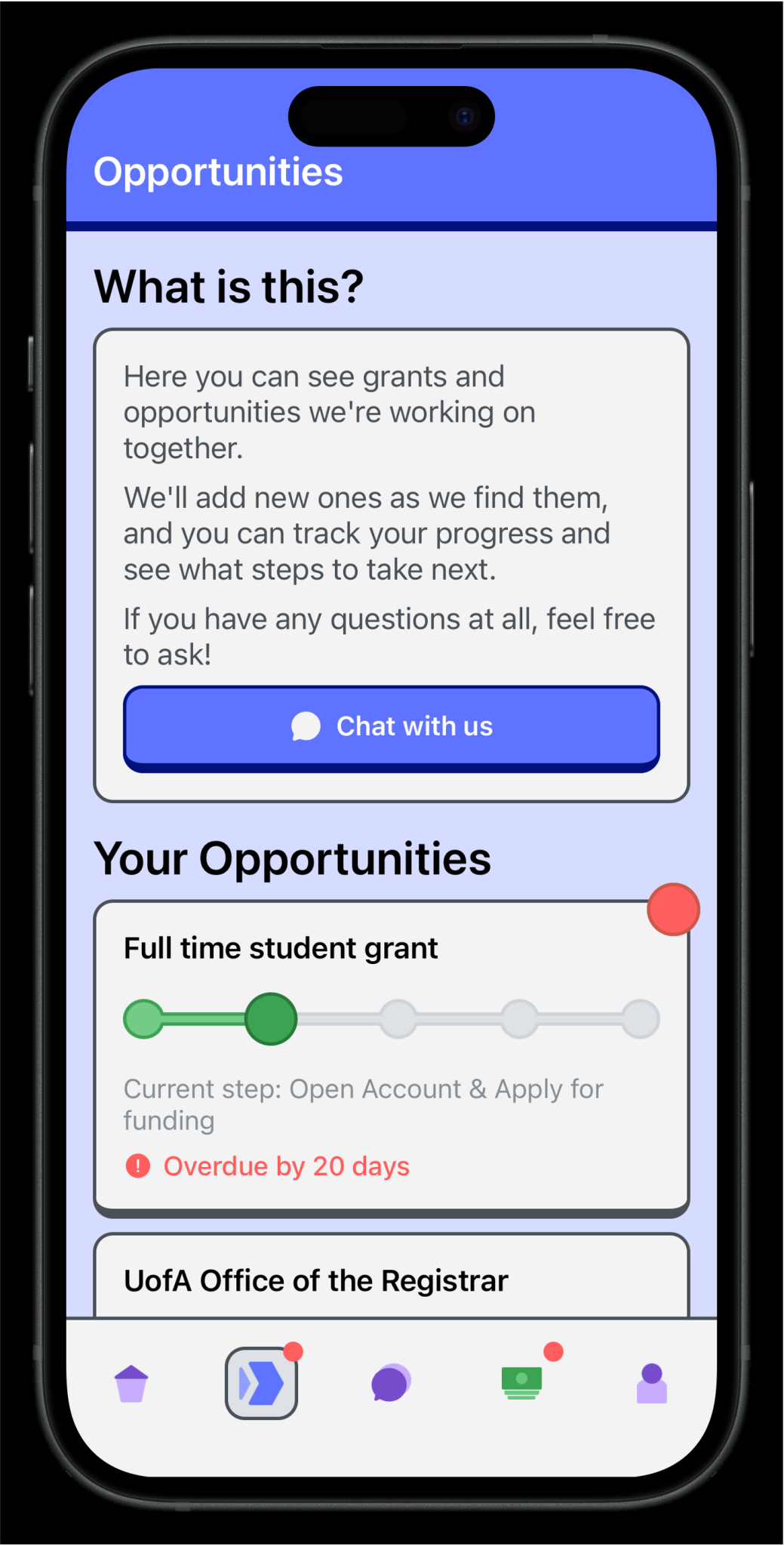
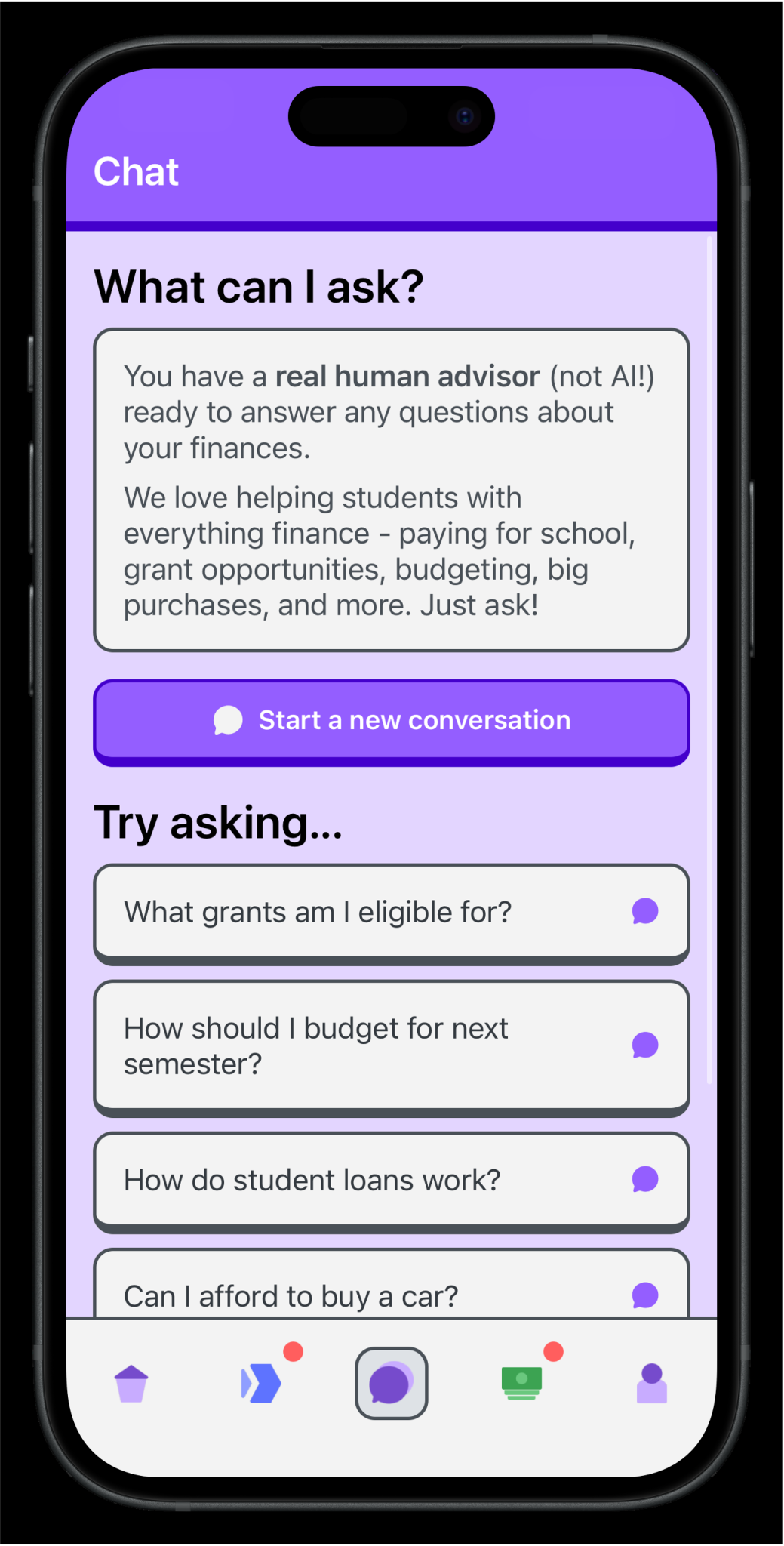
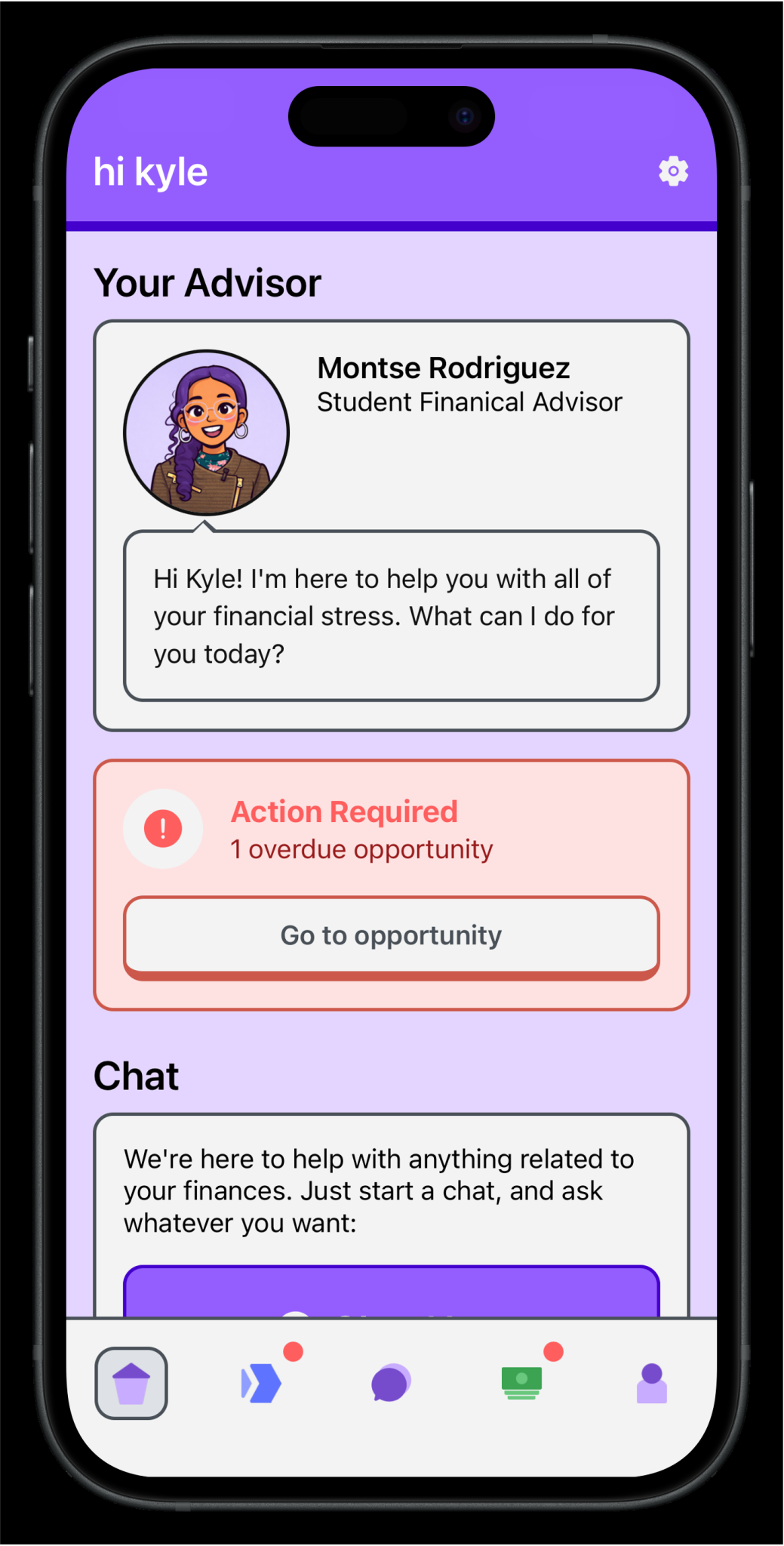
hi finance helps you with this exact application. The government’s forms are confusing and outdated, and the app clears them out of your way: it walks you through the application in plain language, so applying gets way easier and way quicker than fighting the portal on your own. And once you’re in, it keeps watch, notifying you about any other scholarships or bursaries you qualify for. On outcomes, we’ll stay honest: nobody can promise you a bigger cheque, and no app can make you eligible for money you’re not. What hi changes is the fight. The deadline math stays real; the forms stop being the obstacle.
Student aid season is open, and the clock is already running. Apply with hi.
This Week’s Recommendations
Read: Money Like You Mean It by Erica Alini. A Canadian journalist’s guide to debt, saving, and housing for people earning their first real money, and one of the few finance books that treats student debt as a system to work rather than a personal failing.
Listen: Stress Test by The Globe and Mail. A personal finance podcast aimed at people in their 20s and 30s, covering student loans, rent, and first jobs with actual Canadian rules instead of imported American ones.