The semester’s almost over. Maybe you’ve got one more exam, maybe you’re already packing, maybe you’re sitting waiting for your grades to drop. Whatever you’re doing, there’s a short list of things you should probably handle before you end the year. Most of it is the kind of stuff nobody warns you about until it’s too late to do anything about it.
Nobody really tells you about this stuff, and we can guarantee that you’re losing money because of it!
Your Damage Deposit
Let’s start with the biggest one: if you rented off-campus this year, there’s probably a huge chunk of money sitting with your landlord that you’re quietly hoping will come back to you. The good news is that the law is way more on your side here than most students realize.
The Residential Tenancies Act gives your landlord exactly 10 days after you move out and return the keys to either return your full deposit with interest, or give you a written statement explaining what they’re deducting and why.
If they do take deductions, they still owe you itemized receipts within 30 days. And they can’t touch your deposit for normal wear and tear. Faded paint, worn carpet, the usual signs that someone lived there for 8 months? That’s the cost of being a landlord. It comes out of their pocket.
If your landlord misses the timeline or refuses to comply, you can file with the Residential Tenancy Dispute Resolution Service (RTDRS). They can order your landlord to pay you up to THREE TIMES the deposit amount for non-compliance. Yes, three times. It’s a real penalty, and students honestly win these cases all the time.
So how do you make sure you get your money back? Two things, and both of them matter:
Do a move-out inspection with your landlord standing there. The RTA requires it. If you skip the inspection and something gets “discovered” after you’ve left, your leverage to fight it is pretty much close to zero. Make your landlord show up, walk through the unit with you, and sign off on the report before you hand over the keys.
Take photos of every room before you leave. Every wall, every appliance, every weird stain on the carpet. Timestamped. It takes fifteen minutes, and it’s the single biggest reason students win deposit disputes. The students who lose are the ones going off memory a month later, arguing over whether a scuff on the bedroom wall was already there when they moved in.
Residence Move-Out
If you lived in residence this year, your school charges specific, itemized fees for moving out “incorrectly.” These fees aren’t negotiable after the fact. They’re baked right into the residence agreement you signed back in September (the one you probably skimmed), and they add up faster than you’d expect.
Typical charges you might see on your end-of-term statement:
- Improper move-out: $50–$100, depending on the school
- Lost key: $25 or more
- Lock change (if you lost a key): $100+
- Damage and cleaning charges: anything the school finds in the unit after you leave
- Interest on unpaid balances: some schools charge as much as 18% annually, which is higher than a typical credit card
A couple things every residence student should know:
Your dispute window is short. After you move out, your school sends you a damage assessment (usually by email, a few weeks later). From the moment it arrives, you typically have somewhere between 10 and 15 business days to file an appeal, and you usually need to include both written reasoning AND photos. If you miss the window, the charge is locked in. Check your school’s move-out guide before you leave so you know what to do when a charge shows up in your inbox over the summer.
Your move-in inspection matters more than you think. If you didn’t fill out your Suite Condition Report (or whatever your school calls it) within the first day or two of moving in last fall, most residences will automatically hold you responsible for any damage found at move-out, regardless of who caused it. If you can’t find your move-in photos anywhere, you’re starting any dispute from behind.
Before you hand your keys back, do one slow walk-through of the unit with your phone camera rolling. It’s free, it takes ten minutes, and it could save you the price of a flight home.
And for all of the students reading this that are living at home, enjoy it while you can…
Student Loans Need Attention
This is a quick one, but it matters a lot!
If you took out Alberta or Canada student loans this year and you’re coming back to school in September, and you want to keep your loans interest-free all summer, you gotta listen up.
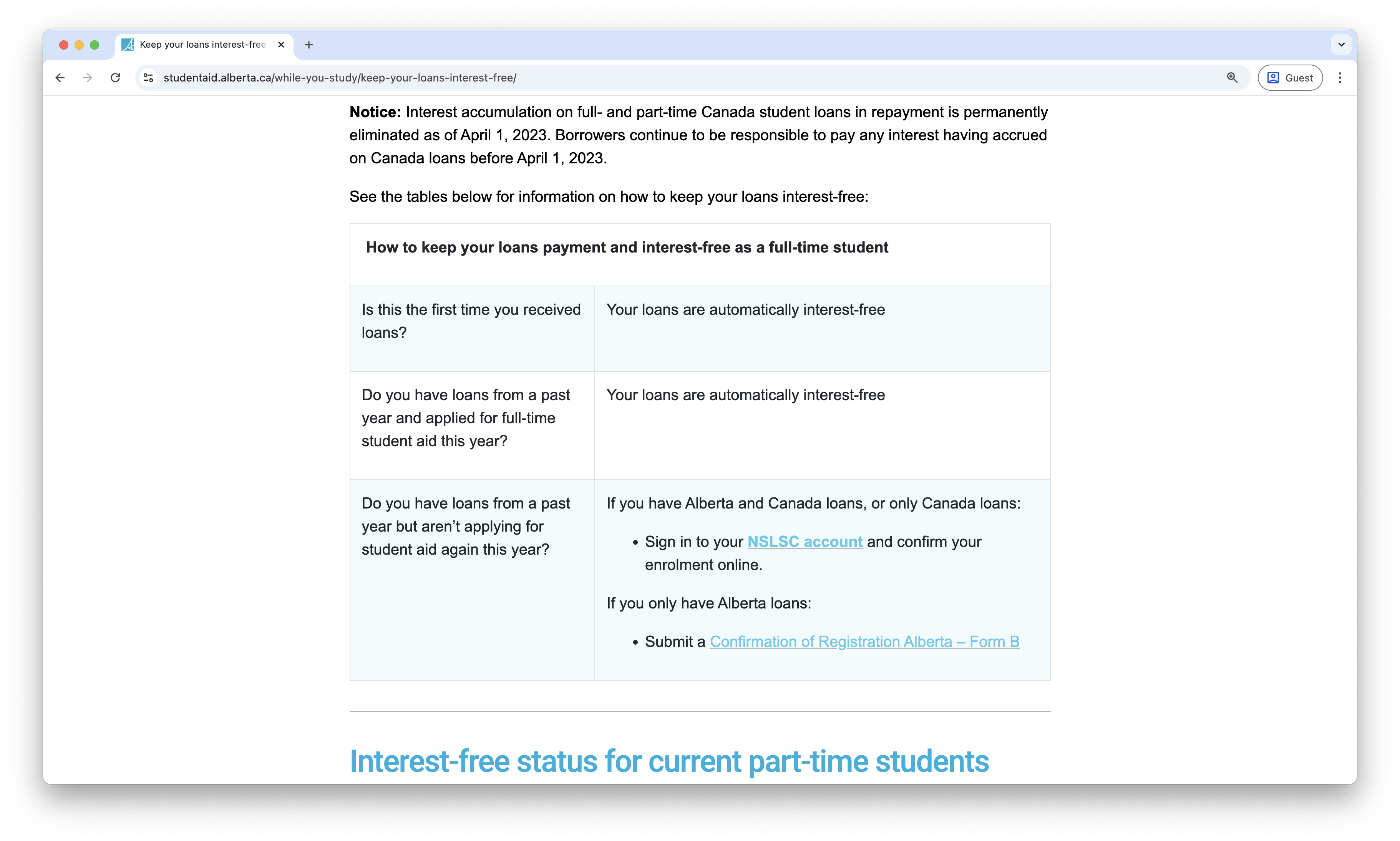
Alberta student loans come with a 12-month grace period after your study period ends. Canada student loans have a 6-month grace period. Both are interest-free during that window, and Canada student loans have been at 0% permanent interest since April 1, 2023 (huge, by the way). The catch is that both programs treat you as “done with school” the second your winter term ends, unless you actually tell them otherwise.
To keep your loans in interest-free status throughout the summer, you need to confirm your fall enrolment. You can do this two ways: either by receiving new funding for the fall term (applying for student aid again) or by filling out an online interest-free status application. Alberta loans go through Alberta MyLoan. Canada loans go through the NSLSC. Two separate logins, two separate confirmations. It’s annoying, but that’s how the system works.
Tax Deadline
It’s April 20th. The tax filing deadline is ten days away. If you haven’t filed yet, this is your reminder to stop putting it off!
Issue 7 has the full walkthrough if you want every detail, but if you’re short on time, here are the two things that matter most:
File even if you earned no income this year. Filing with zero income still triggers your GST/HST credit (free government money, paid quarterly), and it confirms that you carry forward your tuition tax credits for future years when your income is higher, and you’ll get real use out of it.
Don’t mix up calendar year and academic year. This one confuses students year after year. Your 2025 T2202 covers tuition paid between January and December of 2025, not your academic year. September 2025 tuition is on your 2025 form. September 2024 tuition was on LAST year’s form. Students underclaim all the time because they assume T2202S follow the semester system instead of the calendar year.
For the full breakdown of T2202 forms, what counts as eligible tuition, and how carry-forward works, check out our T2202 guide.
The Checklist
A shortlist of the small stuff that costs you money if you forget:
- Meal plan balance. If your school’s meal plan rolls over to next year, your unused swipes will be waiting for you when you come back. If it doesn’t roll over, check whether your school has a donation program that sends unused meals to students facing food insecurity. Either way, figure out your balance before you leave so you know what to do with it.
- University software. Microsoft 365, Adobe Creative Cloud, MATLAB, and any other licences you got through your school may stop working over the summer if you’re not enrolled in spring or summer courses. Download whatever you need before the term ends.
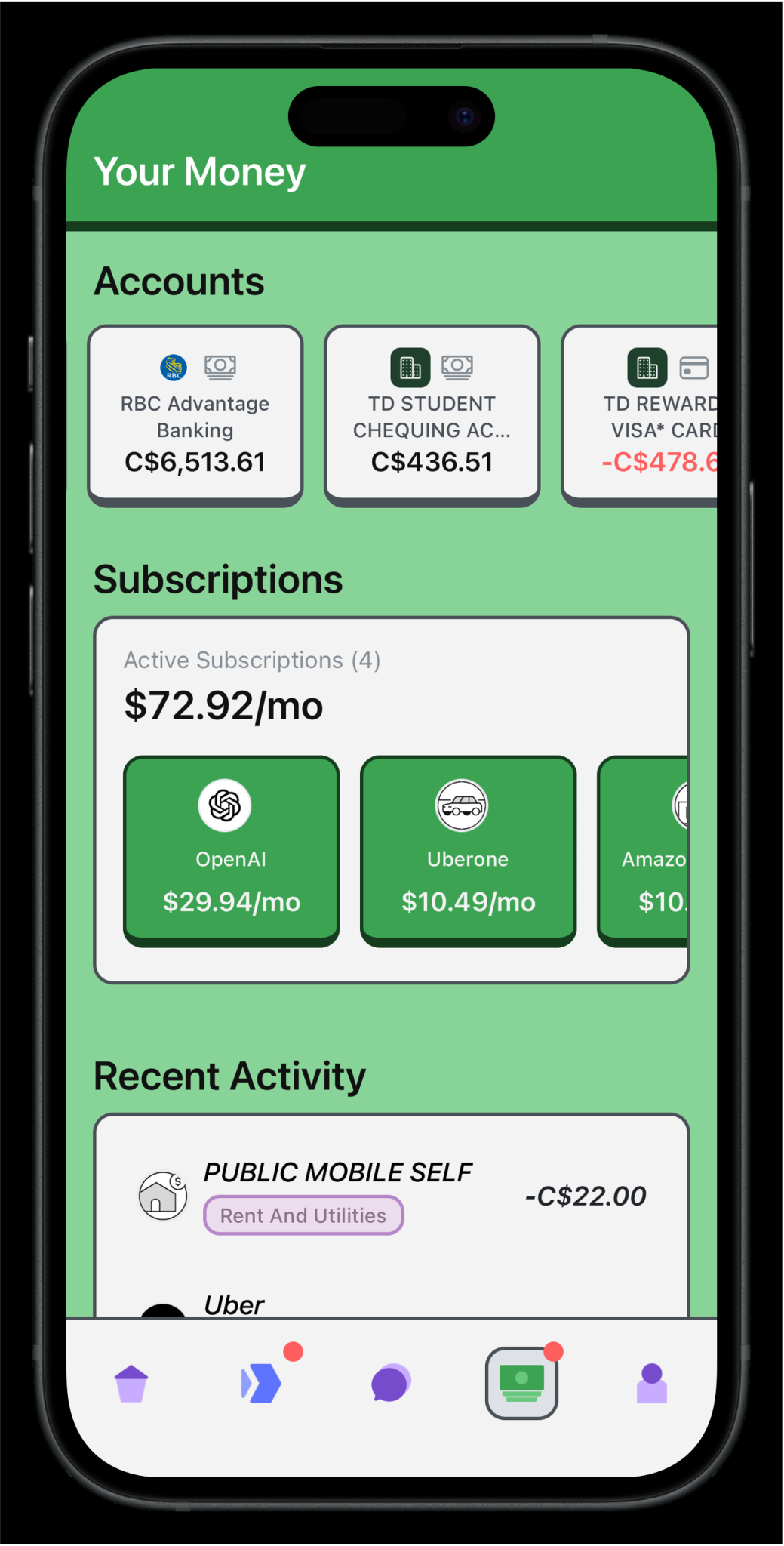
- Paid subscriptions. Most of you guys probably use AI to help you with school, and they typically run you about $20–$30/month each. Cancel now, re-subscribe in September when classes are back. Make sure to keep your other subscriptions up to date as well, including student plans for Spotify Premium, Amazon Prime, etc.
- Roommate reconciliation. Settle your Splitwise balances. Decide what’s happening to the shared couch while everyone is still standing in the same room. “We’ll figure it out later” is how friendships go weird halfway through the summer. Transfer any shared utility accounts into one person’s name, or cancel them outright, before everyone scatters.
- Storage. 5x5 and 5x10 units near campus sell out in late April. If you need one, book now. Interesting stat: in Calgary, sharing a 10x10 unit between four roommates runs around $49/person/month, compared to roughly $119/month for a solo 5x5. Splitting one with roommates is way cheaper if you can coordinate it.
- Mail forwarding. Residence offices will NOT hold your mail after you leave. Canada Post address redirection costs about $109 for 12 months, or you can update your address directly with your bank, the CRA, and any other organizations that send you physical stuff (probably the cheaper option).
Myth vs. Fact
”Your damage deposit always comes back.”
Nope. Landlords can legally deduct for damage beyond normal wear and tear, cleaning costs, and any unpaid amounts. If you skipped your move-in inspection back in September, you have almost nothing to fight the charges with when they land. The students who get their full deposit back are those who documented everything on day one and conducted a formal move-out walkthrough with their landlord. The ones who lose chunks of their deposit are the ones who assumed the process would sort itself out. It won’t.
”You can walk away from a lease because you’re a student.”
This one’s dangerous. Being a student doesn’t give you any special lease-breaking rights. If you signed a fixed-term lease and leave early, you owe rent until either the lease ends or your landlord finds a replacement tenant (and if the replacement rent is lower, you owe the difference). The right way to get out early is to assign or sublet the lease with written consent from your landlord, or negotiate a formal early termination in writing. Walking away leads to collections, damaged credit, and a possible RTDRS claim against you.
This Week’s Recommendations
Read: The Wealthy Barber by David Chilton. A Canadian classic for a reason. Chilton teaches the basics of saving, investing, and insurance through a story about a small-town barber giving advice to his customers, and it ends up being a lot more readable than a personal finance book has any right to be.
Listen: More Money Podcast by Jessica Moorhouse. Canadian-focused episodes on budgeting, investing, and the messier life transitions like moving, breakups, and job loss. A good pick if you’re tired of US finance content that keeps talking about 401(k)s you can’t use.
Next issue: your first summer paycheque. How to read a paystub without feeling dumb, what the TD1 form is, and why most students overpay tax without realizing it.