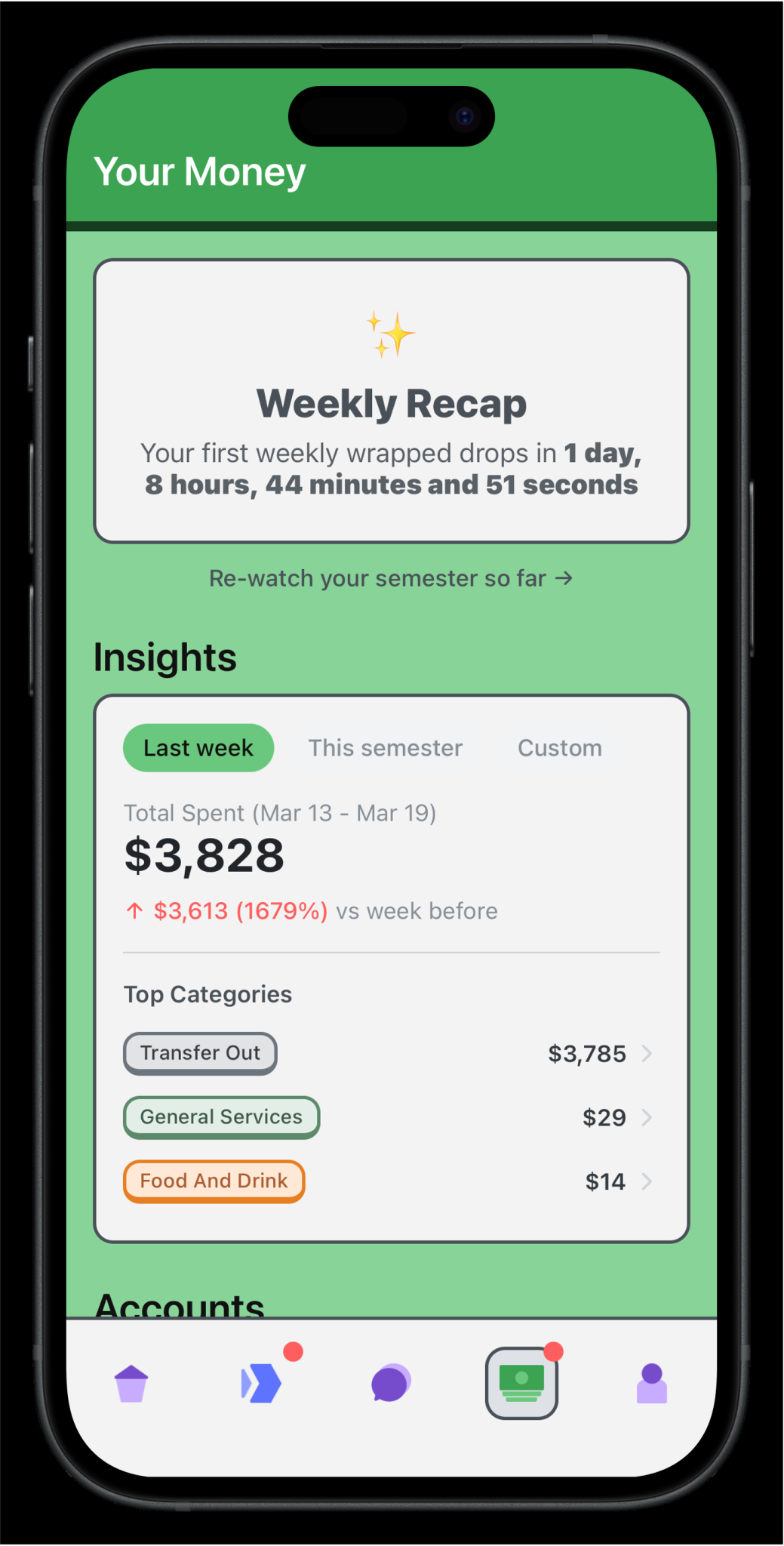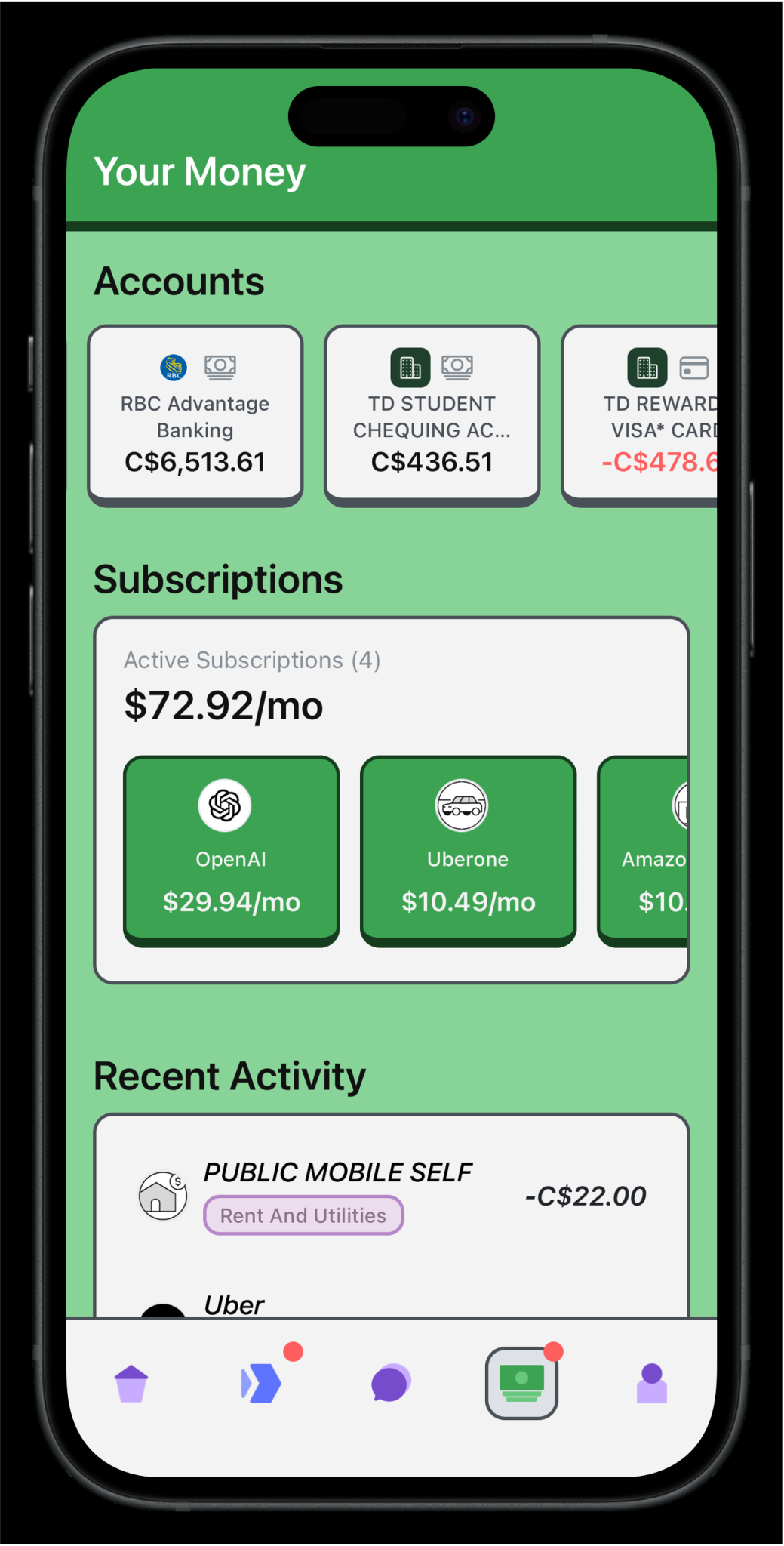
Most students manage between $1,200 to $2,500 monthly depending on location and lifestyle. Income comes from multiple directions, expenses shift every semester, and there’s limited time to earn more. Budgeting on a student income isn’t about restriction. It’s about knowing where your money goes so you can make deliberate choices with what you have. For more on building intentional spending habits, see Issue 4 of the newsletter.
Step 1: Know Your Income
Students tend to undercount their income. Add up all sources:
- Part-time job earnings
- Scholarships and bursaries (tax-exempt in Canada for full-time students)
- Student loan and OSAP disbursements
- Family contributions
- RESP withdrawals
- Summer job savings
- Freelance or gig work
- Co-op and internship income
Most students working part-time earn $400 to $800 monthly. Those with multiple income streams can reach $1,200 to $2,000.
If you receive financial aid in lump sums, convert to monthly amounts. A $4,000 disbursement for a four-month semester is $1,000 per month. Budget against the monthly number, not the lump sum.
Step 2: Know Your Expenses
A few categories eat most of your budget. Typical monthly costs for a Canadian student:
| Category | Estimated Monthly Cost | Notes |
|---|---|---|
| Rent (shared) | $700 to $2,500+ | Varies by city. Roommates are the biggest money-saver. |
| Groceries | $200 to $500 | Cooking at home vs. eating out makes a huge difference. |
| Transportation | $75 to $160 | Most schools offer discounted U-Pass transit passes. |
| Phone and internet | $50 to $100 | Look for student plans. |
| Utilities (off-campus) | $100 to $250 | Heating costs spike in winter. |
| Textbooks and supplies | $50 to $125 (amortized) | Buy used, rent, or check the library. |
| Entertainment and social | $100 to $300 | The category that blows the most budgets. |
| Subscriptions | $30 to $80 | Streaming, gym, apps. These add up. |
Shopping at discount grocers like No Frills, FreshCo, or Walmart saves roughly 20% compared to premium stores.
Step 3: Pick a System
Three methods that work for students:
50/30/20 rule (modified)
The standard version splits after-tax income into 50% needs, 30% wants, 20% savings. On a student income, needs tend to take a bigger share. A more realistic student split:
- 60% needs (rent, groceries, transportation, utilities)
- 25% wants (dining out, entertainment, shopping)
- 15% savings and debt repayment (emergency fund, TFSA, FHSA)
If rent alone eats 50% or more of your income, adjust to 70/20/10. The exact percentages matter less than having a system at all.
Zero-based budgeting
Assign every dollar a job before you spend it. Start with your monthly income and subtract each expense until you hit $0. Nothing is left unaccounted for. This works well for irregular income because it forces a decision about every expense.
Envelope system
Divide your money into categories (physical envelopes or digital equivalents). When an envelope is empty, you stop spending in that category. Simple and visual.
The best method is the one you stick with. Try one for a month, adjust, and move on if it doesn’t fit.
Step 4: Track Your Spending
Track every purchase for at least one full month before making changes. You’ll find expenses you didn’t realize you had.
Free and student-friendly tools
| Tool | Cost | Best For |
|---|---|---|
| YNAB | Free for university students with a .edu or student email (normally $14.99/month) | Zero-based budgeting, connects to Canadian banks |
| KOHO | Free (basic) | Prepaid Visa with built-in budgeting and cashback. Every transaction auto-tracked. |
| Wealthsimple | Free | Students already investing who want budgeting and banking in one app |
| Google Sheets | Free | Full control and customization. Many free templates available. |
| PocketGuard | Free (basic) | Shows how much you have left to spend after bills and savings |
Saving Money on the Big Categories
Groceries
Cooking at home is the single biggest savings lever for most students. Meal planning, buying staples in bulk (rice, pasta, beans, frozen vegetables), and using the Flipp app for flyer deals all add up. Bring lunch to campus instead of buying it.
Housing
Splitting rent with one to three roommates is the most effective way to reduce your largest expense. Compare on-campus residence costs against off-campus renting in your city, since the cheaper option varies by location.
Transportation
Use your school’s U-Pass or student transit discount. Walk or bike when possible. Carpool for longer trips.
Textbooks
Buy used from upper-year students through Facebook groups and campus marketplaces. Rent instead of buying. Check if your campus library has copies on reserve. Look for free digital or open-source versions. For more detail, see our full guide on affording textbooks.
Subscriptions
Audit your subscriptions and cancel anything you haven’t used in 30 days. Use your student ID for discounts (SPC card, student pricing at cinemas, museums, gyms). Take advantage of free campus events, clubs, and recreational facilities.
Daily spending
Small purchases compound. A $5 coffee five days a week is $100 per month. Wait 24 to 48 hours before making non-essential purchases over $50. Use a student credit card with no annual fee and cash back for regular purchases, then pay it off in full each month. You earn rewards and build credit at the same time.
Build an Emergency Fund
Most students skip this, but even a small buffer changes your financial stability. Start with a goal of $500 to $1,000 for unexpected costs (car repair, laptop replacement, temporary income loss). Work toward one month of expenses as your situation improves.
How to get there on a student budget:
- Automate small transfers. Even $25 to $50 per month adds up. Set up a recurring transfer to a savings account.
- Keep it in a high-interest savings account (HISA) or TFSA. Liquid and accessible, but earning more than a chequing account.
- Use round-up features from apps like KOHO or Moka that save your spare change automatically.
$200 in an emergency fund is better than $0. The habit matters more than the amount.
Don’t Leave Tax Money on the Table
Students have access to credits and benefits that many don’t claim.
- Tuition tax credit. Reduces tax you owe. Carry it forward to higher-income years or transfer up to $5,000 to a parent or grandparent.
- Moving expenses. Deductible if you moved 40+ km closer to school.
- Student loan interest. Interest on government student loans qualifies for a tax credit.
- GST/HST credit. Quarterly payments for low-income individuals. You need to file a return to receive it, even if you earned $0.
- Scholarship income. Tax-exempt for full-time students.
File your taxes every year, even with no income. Filing activates the GST/HST credit and builds RRSP contribution room. Many universities offer free tax clinics for students.
Sample Budget: $1,500/Month
A realistic example for someone earning $1,500 per month (part-time job plus parental support) in a mid-sized Canadian city, sharing housing:
| Category | Amount | % of Income |
|---|---|---|
| Rent (shared) | $600 | 40% |
| Groceries | $250 | 17% |
| Transportation (U-Pass) | $100 | 7% |
| Phone | $50 | 3% |
| Utilities (split) | $75 | 5% |
| Entertainment and social | $125 | 8% |
| Subscriptions | $30 | 2% |
| Personal and clothing | $50 | 3% |
| Emergency fund savings | $75 | 5% |
| TFSA or FHSA savings | $75 | 5% |
| Buffer and miscellaneous | $70 | 5% |
| Total | $1,500 | 100% |
Your numbers will be different. The point is to assign every dollar a purpose.
Common Mistakes
Not tracking spending at all. Even rough tracking for a month reveals where money is leaking.
Forgetting irregular expenses. Textbooks at the start of semester, holiday gifts, car insurance renewals. Divide annual costs by 12 and set money aside monthly.
Not adjusting when things change. Review your budget when your income or expenses shift: new semester, new job, new apartment.
Skipping savings because the amount feels too small. $25 per month builds the habit. The habit is more important than the amount.
Being too restrictive. A budget with zero room for fun is a budget you’ll abandon by week two. Allow yourself some wants. Make them intentional.