Every September, first-year students spend hundreds of dollars on things they never use again. We know because we were those students: we bought the stuff, watched it collect dust by October, and wished someone had told us first. Here’s the short list of what you need for your first semester, then everything you can skip.
What you need in first year
The whole list fits in a backpack. Spend on these three things and you’re set for the semester.
A good, reliable laptop
You’ll open it every day. Lectures, assignments, group projects, exams, everything runs through it. Spend money here and you can skip the iPad, the notebooks, and the rest of the list below.
You don’t have to buy the most expensive one. The MacBook Neo is Apple’s budget Mac, built for exactly this: 13-inch, $949 CAD, or $819 with education pricing. It runs lectures, documents, and browser tabs without complaint. If your program leans on heavier software (engineering, video editing, big datasets), step up to the 13-inch MacBook Air at $1,799 CAD, which adds more memory and headroom. Either way, students get education pricing and gift-card promos during back-to-school season.
A comfortable backpack
You’ll walk a lot of campus. Keep it light: laptop, phone, water bottle, wallet, maybe a pen. That’s the whole load. Heavy bags get old fast when you’re crossing campus five times a day, so a simple, comfortable backpack beats a big padded one.
Good noise-cancelling headphones
Campus has quiet study areas, but most days you’ll grab a spot in a cafeteria and work there. Noise cancelling is the difference between two focused hours and two distracted ones. Apple’s new AirPods 5 with Active Noise Cancellation run $179 CAD (coming out Sept 18), and older models or other brands cost less. If you buy one gadget new, make it this one.
What you don’t need in first year
A locker rental
This isn’t high school. Unless your program has labs that need stored gear, a locker is a monthly fee for storing a coat. Carry your coat with you. Your whole day fits in the backpack section above.
The fees add up faster than you’d think: U of T’s athletic centre charges $73.22 + HST for the academic year, and the University of Alberta charges $72 per term for a small locker.
An iPad for class
Everyone wants one for the aesthetic. Neat handwriting on a screen, colour-coded notes, the whole setup. In practice, an iPad sits in your bag while you do everything on a laptop anyway.
Submitting assignments is the dealbreaker. Most course portals, quizzes, and group work run through software built for laptops, and making an iPad do that job turns every deadline into a workaround. A laptop handles all of it without the fight.
The iPad isn’t even the cheap option: the base 11-inch iPad starts at $649 CAD. That’s more than a third of a MacBook Air for a machine that can’t submit your assignments. Put the $649 toward the laptop instead. If you’re a tablet person and you take notes better that way, that’s your call, but buy it second-hand after your first semester, once you know your program works that way.
Brand new everything
A brand new water bottle, a brand new backpack, a brand new wardrobe for September. High school trained you to show up looking new, and it’s an expensive habit to carry into university.
Two things break the habit. First, you don’t see the same people every day anymore. Nobody’s tracking whether your backpack is this year’s model. Second, the stuff you already own works. The water bottle from high school holds water exactly the same as the $45 one on your feed.
Spend the “new everything” budget on anything else: groceries, the headphones above, or keep it. Nobody at your first lecture will remember what you wore, and by October you won’t be trying to impress anyone in your classes either.
Brand new textbooks (or any textbooks yet)
Don’t buy a single textbook before classes start. A lot of professors tell you on the first day that you won’t need the one on the syllabus, or that last year’s edition is fine. If you buy in August, you’re paying full price for a book that might sit sealed on your shelf all year. Universities themselves tell you to expect $1,000 to $2,000 a year on books and supplies, so cutting even part of that matters.
When you do need one, buy it used. Facebook buy-and-sell groups for your campus are full of people from last year’s course trying to offload the exact book. Or split one with a classmate: two names on one book, half the cost, and you end up studying together anyway. Our full guide to affording textbooks covers free open-source alternatives, rentals, and where used copies cost the least.
New notebooks and stationery
That stationery haul you’re planning? You’ll use it for two weeks. After that, your classes run through your laptop and your notes live in one document per course.
Put the money into a laptop you can trust instead. You’ll open it every day for four years, for lectures, assignments, exams, and job applications. A reliable laptop beats a drawer full of unused pens.
A Costco run without a list
First time living on your own, the Costco run feels like freedom. Without a list, you come home with a three-pack of parchment paper that takes four years to finish, because nobody at home was baking cookies every week. In a tiny dorm, that stuff takes up space you don’t have.
Buy only what you’ll go through daily: toilet paper, snacks you eat between classes, the basics. If you can’t picture using it this month, leave it on the shelf. And factor in the membership before you go: a Costco Gold Star membership runs $65 a year, so split the trip and the fee with roommates if you can.
Before you buy anything: check your grants
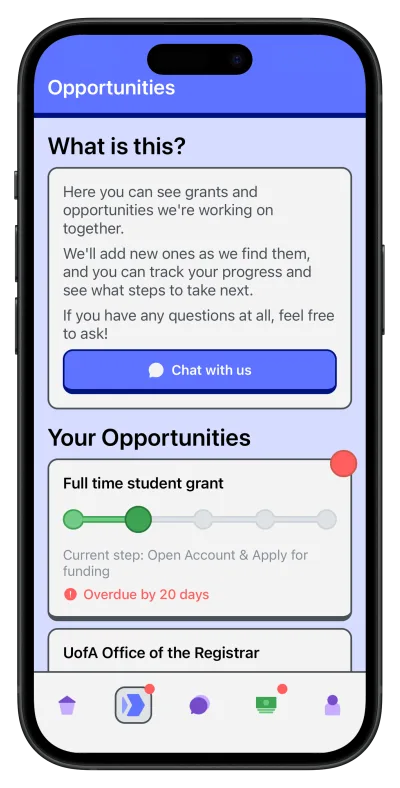
One more thing before you spend your own money on a laptop or anything else on this list. You might not have to. Most students qualify for more grant money than they realize, and grants don’t get paid back. The Canada Student Grant alone pays full-time students up to $4,200 a year, and provincial programs like Alberta’s add more on top.
Money you already qualify for beats money you save skipping a locker. Take two minutes and check your eligibility with the hi finance survey and we’ll tell you what you qualify for and help you apply. That $819 MacBook Neo stings a lot less when grant money pays for it.
This guide is general information for Canadian students, not personalized financial advice. Program rules and dollar amounts change, so confirm the details with the official government source before acting on them.