
TFSA growth projector
See what regular contributions inside a TFSA could grow into over time, and how much of that balance is tax-free growth.
Updated October 2026
What this projection does and doesn't show
The math is straightforward: your contribution room starts as a lump sum, you add the monthly amount, and everything compounds at the return you picked. What the chart can't show is the path. A 5% average return is usually not 5% every year. Some years land at +15%, others at -10%, and the order matters more than people expect. Treat the end number as a midpoint between a good outcome and a bad one, not a schedule.
The other simplification: the calculator stops adding money once you've used up the contribution room you entered. In real life, new room opens every January 1 ($7,000 for both 2025 and 2026), so a plan that runs past next year probably has more room waiting than this projection assumes.
Why the TFSA is the right wrapper for this
Growth inside a TFSA is never taxed, and withdrawals are tax-free too, at any time, for any reason. Compare that to a regular (non-registered) account, where interest and capital gains get taxed as you earn them. At a 5% return, the tax-free difference compounds: over twenty years it can be thousands of dollars, without you doing anything different.
The catch is contribution room. It's limited, it doesn't refresh mid-year, and over-contributing costs 1% per month on the excess. Check your room in CRA My Account before you set up automatic contributions.
What to hold while you're a student
Money you might need within a couple of years belongs in cash or GICs inside the TFSA, where a 2–4% return is realistic and the principal doesn't swing. Money you won't touch for five or more years can take equity risk: broad-market ETFs in a commission-free account are the standard starting point. For the full breakdown, see TFSA for Students, and for how the TFSA compares to the RRSP and FHSA, FHSA for Students.
Hi Finance App
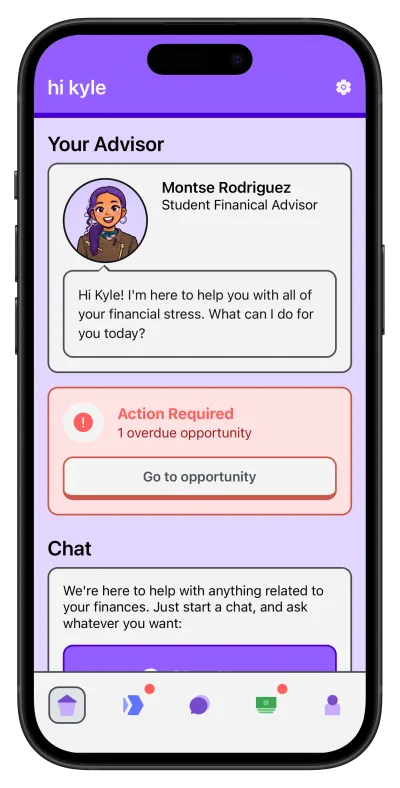
Your finances,
finally under control.
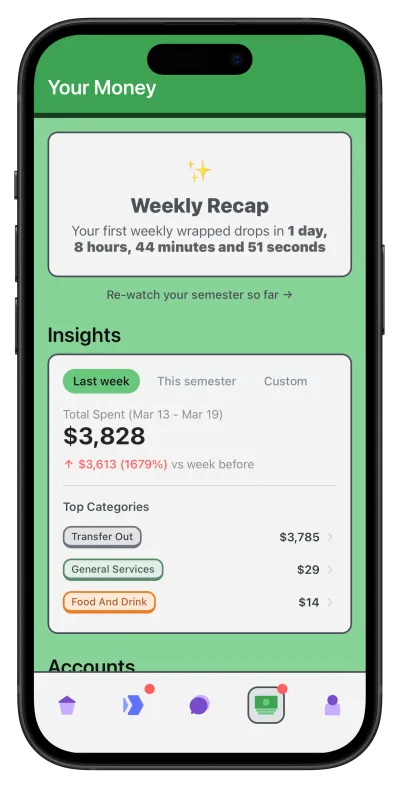
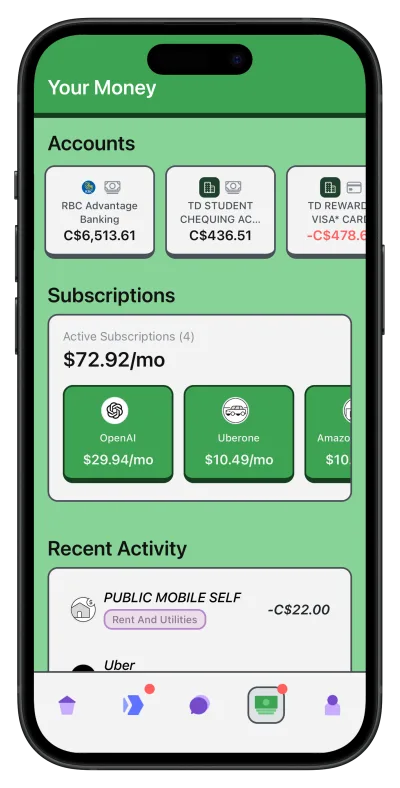
- Built-in budgeting & bank connection
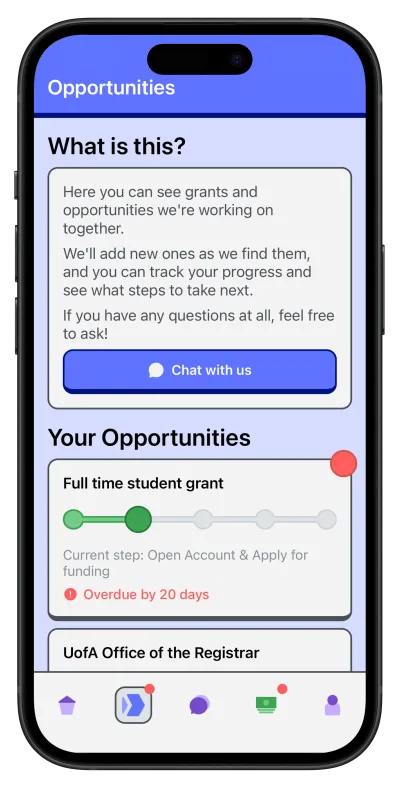
- Grants, bursaries & scholarships
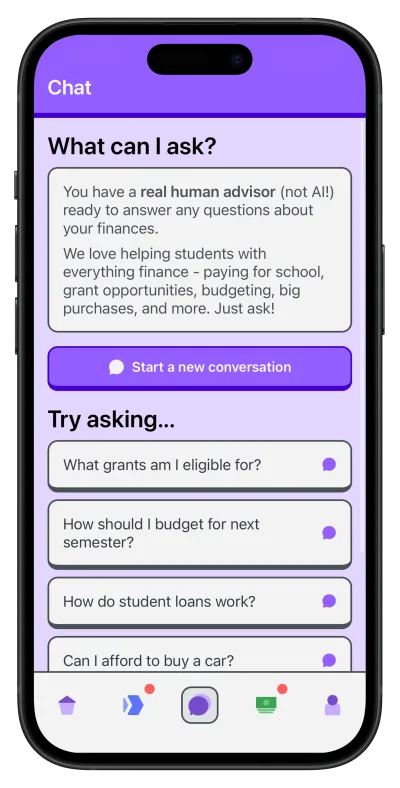
- Personalized advice, any time
- Built for Canadian students


Stay in the loop
Join thousands of students who are already getting smarter about their money.